



Quick answer
A refillable candle gift set treats the container as the durable good and the wax as the consumable, so the vessel takes a new candle instead of going in the trash. The ten compared here run from $25.30 to $285. What separates them is the mechanism: whether the wax arrives sealed in its own tin or insert, drops into the vessel bare, or is poured by the recipient. That choice decides how much work the gift asks of them.
Somebody on your list is getting a candle this year. It is the safest gift there is, which is exactly the problem: by February it is a glass jar with a wax ring in the bottom, too nice to throw out and too candle-shaped to reuse.
The ten gift sets below are built on the opposite assumption: the container is the durable good and the wax is the consumable.
That changes the engineering, because the vessel has to accept a refill and release a finished one, over and over. Each one solves it differently, so the list runs in three groups by mechanism rather than by price. For background, see our guide to refillable candle systems.
First, a note on burn times
Every brand here publishes a burn time. None of them publishes the method behind it, and there is no common test standard, so the figures are not directly comparable. The useful way to read them is per ounce of wax, which is the column we added to the table below. Wick size and flame width drive how fast wax is consumed, the same physics behind candle tunneling.
Break for research
Help us figure out our next scents
These scents are top of nose right now. Give us your opinion.
- Cashmere plumSmells like: ripe plum over soft woods
- Himalayan bambooSmells like: fresh-cut green stems
- PetrichorSmells like: the first rain on warm ground
- Coriander and limeSmells like: lime zest with a peaty, smoky edge
Want to hear which ones make it?
We'll email you the results and which scents go into testing.
Thanks!
You're on the list. Check your inbox.
There was an error. Please refresh the page and try again.
Unsubscribe anytime. Your vote counts whether or not you sign up.
1. Fill Mill: someone who changes scent with the season and will not tolerate a chore in between
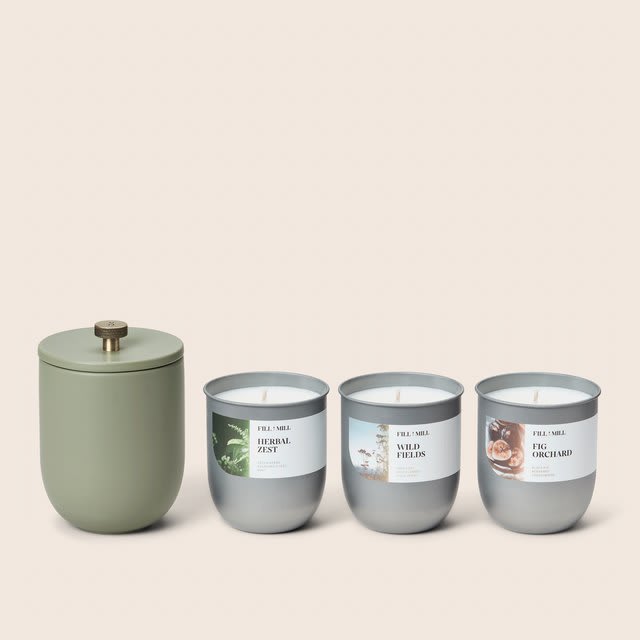
01 / Magnetic base, refill tin
Fill Mill
Starter Set: "choose your Mill vessel and three premium candle Fill scents"
Best for someone who changes scent with the season and will not tolerate a chore in between.
| Gift price | $75 Starter Set, or $45 for the Mill on its own |
|---|---|
| Refill | $20 each, or $15 on auto-refill |
| Burn time | 30 to 40 hours per 8.5 oz Fill |
| Per ounce | 3.5 to 4.7 hours |
Photo: Fill Mill, fillmill.co · Prices and specs read August 2026.
What is in it, in the brand’s own words
Wax
Their FAQ gives the composition as "a soy-paraffin wax blend with trace amounts of UV inhibitors."
Wick
Cotton, described as "100% natural fibers" engineered with "helix braiding."
Fragrance
Developed with outside fragrance houses. Not published: no phthalate or IFRA statement, and no fragrance load, on the pages we read.
Container
Ceramic. Origin given only as "Imported," and the glaze composition is not published.
How it works
Fill Mill puts the retention mechanism inside the vessel. A ceramic base, the Mill, holds a self-contained candle tin, the Fill, joined magnetically. Their page describes a "Patent-pending magnetic locking system": "A hidden magnet in the Mill holds the Fills in place and the lid preserves fragrances when not in use." No thread to align and no adapter ring to lose. The lid knob is knurled brass and doubles as a match striker.
What we like
The refill is a finished candle with its own cotton wick, so a swap involves no pouring and no re-wicking. Because wax stays in the tin, scent can change partway through once the Fill has cooled. The tin has a published end-of-life procedure: freeze it overnight, pop out the wax and wick remainder, rinse, recycle. Starter sets ship free.
The catch
The system is closed and they say so: "All of our Mills have a patent pending magnet system that is designed to secure and work only with our Fills." Recycling the tin means freezing it overnight to pop the wax out, which is more of a ritual than it sounds. And the scent range turns over, three new scents a season by their own account, so check that the scent you have in mind is listed before you commit someone to the system.
2. Grow Fragrance: someone who wants to read a full ingredient list and a swap with nothing to clean
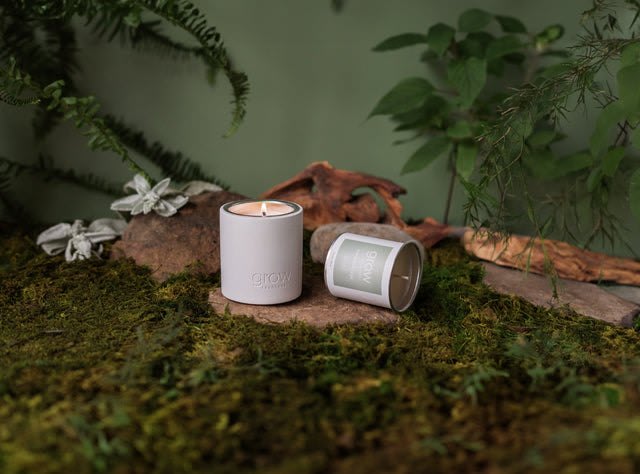
02 / Gravity drop-in, aluminum insert
Grow Fragrance
Candle Set: vessel plus one refill
Best for someone who wants to read a full ingredient list and a swap with nothing to clean.
| Gift price | $30 Candle Set; $72 Bestsellers Set, three candles and a holder |
|---|---|
| Refill | $24 each |
| Burn time | 40 to 45 hours per 6.5 oz insert |
| Per ounce | 6.2 to 6.9 hours |
Photo: Grow Fragrance, growfragrance.com · Prices and specs read August 2026.
What is in it, in the brand’s own words
Wax
"pure soy wax."
Wick
"lead-free unbleached cotton wicks."
Fragrance
"Certified 100% Plant-Based" by the USDA, with a full ingredient list published per scent by INCI name and plant source. Load is not published.
Container
The refill is aluminum. The brand refers to "a Grow Fragrance concrete vessel"; the vessel product page does not state a material.
How it works
Grow Fragrance keeps the swap down to a lift and a drop. An aluminum insert carrying the wax and wick sits inside a separate reusable vessel, and that is the whole interaction: "Just pop the candle refill out and swap in the new one you want." No fastening, thread or latch is described on the pages we read.
What we like
Both halves of the fit are published, so compatibility is checkable before you buy: "Vessel: 3.25in wide, 3.5in tall; Insert: 3in wide, 3in tall." The refill copy repeats "(No cleaning required!)" because wax never touches the vessel, and recycling guidance is explicit: "You don't even need to remove the thin layer of wax left in your candle." Free US shipping over $70, and a one-time exchange or refund within 60 days.
The catch
This one matters for a gift. The brand publishes that the refill line is being retired: "Our 6.5oz Candle Refills Are Being Phased Out... our 6.5 oz single-wick candles are gradually being retired to make room for what's next." The product their FAQ points to instead is not described as refillable. Buy this as a lovely candle, not as a system you are signing someone up for. And a refill alone is not a usable gift: "Candle refills do not come with a white vessel".
3. Highbrow Hippie: the person you buy an object for, not a candle
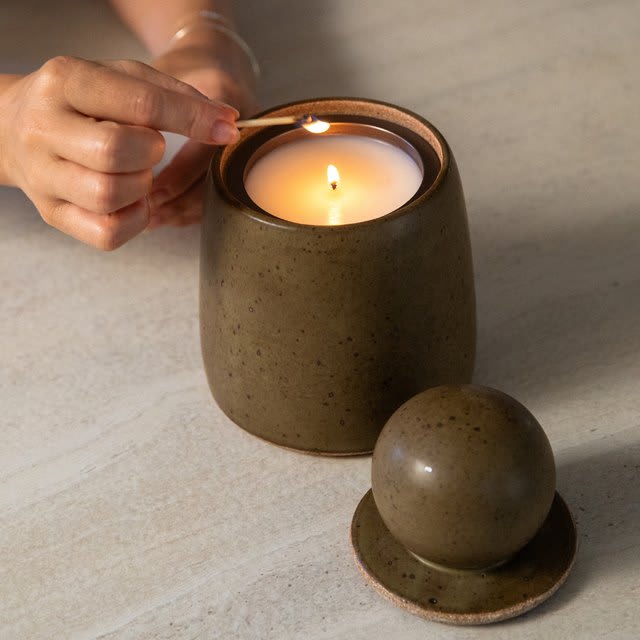
03 / Gravity drop-in, aluminum insert
Highbrow Hippie
The Refillable Candle: hand-thrown vessel plus one insert
Best for the person you buy an object for, not a candle. This is the splurge.
| Gift price | $285 Wide, $295 Tall, insert included |
|---|---|
| Refill | $58 each |
| Burn time | 56 hours per 10 oz insert |
| Per ounce | 5.6 hours |
Photo: Highbrow Hippie, highbrowhippie.com · Prices and specs read August 2026.
What is in it, in the brand’s own words
Wax
"Soy-coconut blend." Ratio not published.
Wick
Not published: the word appears on both product pages only inside trim instructions. No material, no count.
Fragrance
One scent, Bohemian Grove, with a published note pyramid. Not published: no phthalate, IFRA or certification statement, no perfumer named, and no ingredient list beyond the wax line.
Container
Ceramic, "individually hand-thrown and glazed by a Los Angeles-based ceramicist." The insert is described as a recyclable aluminum insert.
How it works
The mechanism is as plain as it gets. A metal insert drops into a hand-thrown ceramic vessel and lifts back out: "Once the wax has burned down, simply remove the recyclable aluminum insert, clean the vessel with hot water, and drop in a new refill - ready to light again." The refill is a separately purchasable product rather than a promise, which is the part worth checking at any price.
What we like
The vessel is the point and they describe it precisely: "individually hand-thrown and glazed by a Los Angeles-based ceramicist, making every piece truly unique - no molds, no mass production..." They volunteer that "vessels may vary slightly in size and color" rather than implying uniformity, and they publish exterior dimensions for both sizes. Burn guidance is specific enough to follow without asking: stop at half an inch of wax, trim to a quarter inch, three to four hour sessions.
The catch
At $285 this is a large object to buy for someone whose taste you are guessing at, and there is exactly one scent, so there is no room to choose. Refills are $58. And for a handmade ceramic vessel at this price, no warranty or replacement vessel is published, so a chip means starting over.
4. Modern Sprout: someone who will actually plant something
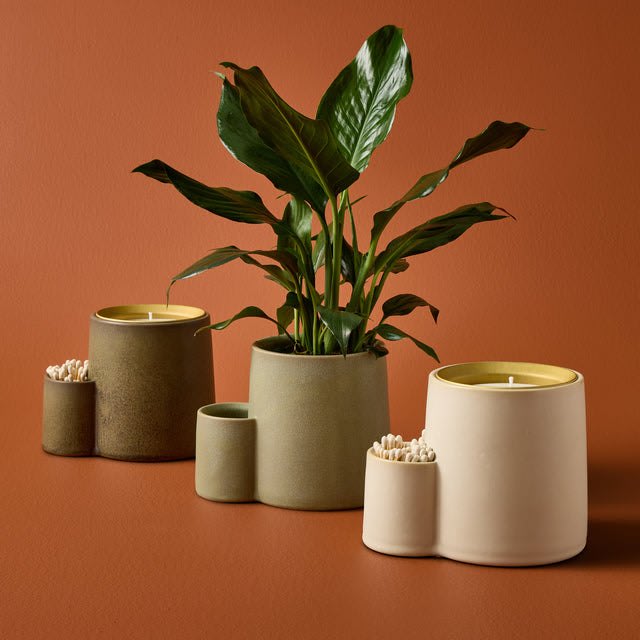
04 / Gravity drop-in, then a planter
Modern Sprout
Ember Earth Candle + Planter: ceramic vessel, candle tin, 50 matches
Best for someone who will actually plant something. The vessel has two second lives, not one.
| Gift price | $48 kit |
|---|---|
| Refill | $20 each |
| Burn time | 50+ hours per 8 oz tin |
| Per ounce | 6.3 hours or more |
Photo: Modern Sprout, modernsprout.com · Prices and specs read August 2026.
What is in it, in the brand’s own words
Wax
"100% soy." No blend, origin or additive detail published.
Wick
Not published: no material, construction or count on the product page, the hangtag, or the help center.
Fragrance
"Botanical fragrances inspired by nature that feature essential oils," with per-scent notes. Not published: no phthalate statement, no certification, no ingredient list.
Container
Glazed ceramic with a reactive glaze, "Assembled in Chicago of domestic and imported components." The candle sits in a brass-plated tin.
How it works
An 8 oz soy candle in a brass-plated tin lifts out of a glazed ceramic vessel. From there the buyer picks one of two second lives. Drop in a $20 refill, which is the same tin sold on its own, or convert the vessel: "Remove candle tin. Add soil with a plant or seeds," then "Fill side car with water." The sidecar is a reservoir that feeds the plant from below, and the vessel takes a 3 to 4 inch plant.
What we like
Both second lives are documented on the brand's own pages rather than implied, which is the difference between a vessel you could reuse and one with a route. The refill is a drop-in swap with nothing to melt or scrape, and the three-step conversion is printed on the physical hangtag that ships with the product, so a recipient who never opens a browser still gets the instructions.
The catch
The kit gives you a planter but not a plant. Contents are the candle, the vessel and matches; soil and seeds are yours to find, which makes this a better gift for someone who already gardens than for someone you are hoping to convert. Three scents, no unscented option, and nothing published about clearing the finished tin before the next one goes in.
5. OZAIZ: a recipient short on shelf space who will genuinely drink from the glass afterwards
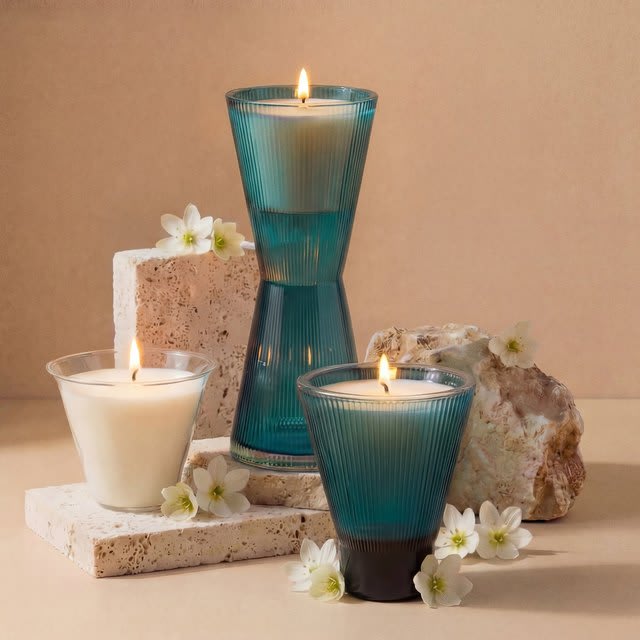
05 / Convertible drinkware, glass sleeve
OZAIZ
ZAI Candle: hand-blown tumbler plus a candle insert
Best for a recipient short on shelf space who will genuinely drink from the glass afterwards.
| Gift price | $100 ZAI Candle, $125 to $132 for the AIZ carafe version |
|---|---|
| Refill | $42 each, fits both vessel sizes |
| Burn time | About 30 hours per 8.8 oz insert |
| Per ounce | 3.4 hours |
Photo: OZAIZ, ozaiz.com · Prices and specs read August 2026.
What is in it, in the brand’s own words
Wax
"Soy Wax Blend." What it is blended with is not published.
Wick
Not published: the FAQ instructs trimming "each wick," so there is more than one, but no material or count is given.
Fragrance
"both natural essential oils and synthetic aromas (used when natural fragrances compromise animals or the sustainability of natural resources)." Not published: no phthalate, paraben or IFRA statement, and no load.
Container
Hand-blown borosilicate glass, stated dishwasher safe with hand washing recommended. The wax sits in its own clear glass sleeve inside it.
How it works
OZAIZ answers the question from the other direction: the container outlives the wax by being something else. The ZAI tumbler and AIZ carafe are hand-blown borosilicate glassware sold as drinkware, and the candle visits them. A soy wax blend insert, in its own clear glass sleeve, nests inside. "When empty, dispose of clear candle glass in the recycling bin and insert a new candle or return to drinkware."
What we like
The nested sleeve is what makes the drinkware return possible, because wax never contacts the vessel: "Do not place wax directly into the ZAI. Always use the clear glass insert provided." One refill serves both the 10 fl. oz tumbler and the 33.8 fl. oz carafe. The vessel takes other modes too: "Transform from a drinking glass into a perfumed candle, mineral rock diffuser and pillar candle holder." For a gift, that is an object with somewhere to go after the wax runs out.
The catch
The refill is $42, and each cycle consumes a glass sleeve as well as wax. OZAIZ says to "dispose of clear candle glass in the recycling bin," and does not publish what that sleeve is made of on the pages we read. Worth establishing before you sign somebody up for a $42 cycle, because glass is not one material once it reaches a sorting facility, which is the note directly below. The insert also cannot be burned on its own: "Never burn a candle insert without pairing and nesting inside of an AIZ or ZAI vessel."
6. Arbor Made: the person who reads where things come from, and anyone who wants a fragrance-free option

06 / Flexible pop-out base
Arbor Made
Candle Set, or a jar and refills bought separately
Best for the person who reads where things come from, and anyone who wants a fragrance-free option.
| Gift price | $54 Candle Set, $59 for a named-scent set |
|---|---|
| Refill | $18 each, down to $10.50 in the largest bundle |
| Burn time | Up to 35 hours per 7.1 oz refill |
| Per ounce | Up to 4.9 hours |
Photo: Arbor Made, arbormade.co · Prices and specs read August 2026.
What is in it, in the brand’s own words
Wax
"100% natural soy wax, sourced in Iowa, USA."
Wick
Cotton, "sourced in North Carolina, USA." Construction not published.
Fragrance
Held to a published standards list: "Non-Toxic / 100% Phthalate-Free / Vegan / Cruelty-Free," sourced in North Carolina. A fragrance-free refill sells at the same price. Load is not published.
Container
Ceramic with heat-resistant silicone and a cork lid, or silicone with a cork lid. Where the jar is made is not published.
How it works
Arbor Made moves the mechanism to the bottom of the jar: "our patented refillable candle jar makes it easy for you to push up on the flexible base to *pop* out the leftover wax... now you can just reuse the jar and slide one of our custom wax refills right in." No tin, no insert, no tool.
What we like
They built the mechanism into the container instead of adding a part to it, which is a different answer to the same problem. Their product pages call it "our patented refillable candle jar." The consequence is what matters: because the jar itself flexes, the refill is wax and a wick, with no tin, insert or sleeve thrown away each cycle. Sourcing is also published part by part, wax from Iowa, cotton wicks and fragrances from North Carolina, refills poured in Michigan, and a fragrance-free refill sells at the same price as the scented ones.
The catch
The bare-wax mechanism is elegant, and it also means the wax sits against the vessel rather than inside a tin, so the jar is yours to keep clean. Their burn rules are specific about the upkeep: "trim your wick to 1/4" every time before you light it (besides the first time)." An $8 jar cleaner of water and orange peel concentrate and a $28 care kit with a trimmer and snuffer are sold separately for anyone who wants them. Jar and wax are also separate products, and the pages do not state what either set contains, so you are buying a quantity you cannot check.
7. ReCandle Co.: someone who likes a handmade object and does not mind a small ritual at the end of a candle
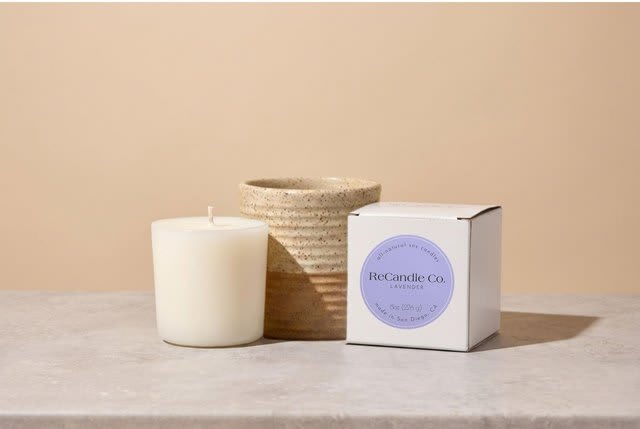
07 / Self-releasing wax puck
ReCandle Co.
Starter Kit: ceramic vessel plus one refill
Best for someone who likes a handmade object and does not mind a small ritual at the end of a candle.
| Gift price | $48 Starter Kit |
|---|---|
| Refill | $25 each |
| Burn time | About 40 hours per 8 oz refill |
| Per ounce | 5.0 hours |
Photo: ReCandle Co., recandlecompany.com · Prices and specs read August 2026.
What is in it, in the brand’s own words
Wax
"a soy wax blend" engineered to contract as it cools. "No paraffin, no synthetic dyes."
Wick
"a lead- and zinc-free cotton wick," pre-centered in the refill.
Fragrance
Phthalate-free oils "formulated without phthalates or ingredients on California's Proposition 65 list." At least one scent is infused with essential oils. An unscented refill is sold. Load is not published.
Container
Stoneware, "locally handcrafted from natural stoneware clay in Oceanside, CA by a small-batch artisan," kiln-fired over 2,000°F.
How it works
ReCandle Co. puts the engineering in the wax rather than the vessel. No tin, no insert, no latch. A bare wax puck sits directly in a ceramic jar and the formulation does the releasing: "Our specially designed soy blend contracts as it cools, so the spent wax lifts right out..." The refill arrives "pre-poured, pre-wicked, and shaped to fit our ceramic vessel exactly."
What we like
Removal is published as a method, not a hope: cool about an hour, press the wax on the side walls toward the center to break the seal, then "flip the jar upside down and tap the bottom." Every part is buyable on its own, which makes the refill a good follow-up gift, and the vessel is presented with no reuse limit: "We don't put a specific limit on reuse."
The catch
The system is closed: "Refills from other brands might not fit correctly and may not burn safely." The release chemistry carries a burn cost they disclose themselves: "Since our wax is a little firmer by design... it may take a couple of burns to reach the edges completely. That's normal." And not every gram burns, by design, since each refill "leaves a small amount of wax at the bottom so the refill can release cleanly."
8. Cellar Door, at The Good Fill: the cheapest way in, with a full materials list behind it

08 / Drop-in wax puck, double wick
Cellar Door, at The Good Fill
Refillable Candles: candle in a glass jar, six scents
Best for the cheapest way in, with a full materials list behind it.
| Gift price | $25.30 candle in glass jar |
|---|---|
| Refill | $19.80 each |
| Burn time | About 30 hours per 8 oz candle |
| Per ounce | 3.8 hours |
Photo: The Good Fill, thegoodfill.co. Candle by Cellar Door Candles. · Prices and specs read August 2026.
What is in it, in the brand’s own words
Wax
"Beeswax and coconut oil blend." Ratio and beeswax origin not published.
Wick
"unbleached pure cotton wicks dipped in beeswax." Two per candle.
Fragrance
"essential oils (cold pressed or steam distilled)." No certifying body is named and no per-scent composition is published. No unscented option.
Container
Glass. Dimensions, maker and origin are not published, and the jar is not sold empty.
How it works
The simplest mechanism on this list, and the cheapest. A bare wax puck drops into a glass jar, and when it is done you pull the old wicks out and drop the next one in: "Once the candle burns down completely, remove what's left of the old wicks from the bottom of the container, pop in your refill candle, and enjoy (again)!" Note that Cellar Door makes the candle; The Good Fill is the zero-waste shop that stocks it.
What we like
The materials line is the most complete of any entry here for the money, and it names extraction methods, not just ingredients: "Beeswax and coconut oil blend, essential oils (cold pressed or steam distilled), unbleached pure cotton wicks dipped in beeswax." The end-of-life copy also volunteers the part of the cycle that does not close, which is rarer than it should be: "Whatever is left of the wick should be thrown away (we wish it wasn't so)."
The catch
The refill saves about a fifth off the price of a whole candle, so the economics sit close to simply buying another one. And the jar is not sold empty, so a broken one means buying a whole candle to replace it. Dimensions for the jar are not published on the product page either, so you cannot check it against a shelf before it arrives.
9. Siblings: someone who already owns a jar they love, or who would rather make the candle than unbox it
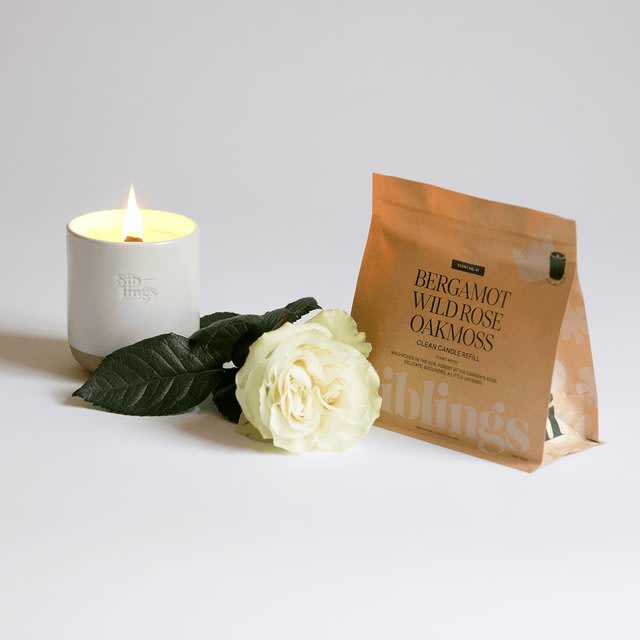
09 / You supply the vessel
Siblings
The Ritual Set: vessel, refill pouch and a wick trimmer
Best for someone who already owns a jar they love, or who would rather make the candle than unbox it.
| Gift price | $63 Ritual Set |
|---|---|
| Refill | $34 each |
| Burn time | Up to 60 hours per 10 oz pouch |
| Per ounce | Up to 6.0 hours |
Photo: Siblings, siblings.co · Prices and specs read August 2026.
What is in it, in the brand’s own words
Wax
"a plant-based wax made from coconut and soybean oil," soy "non-GMO and grown in the U.S.," coconut from the Philippines and Indonesia. Ratio not published.
Wick
Wooden as standard, five inches; a lead-free cotton wick is sold separately. Wood species not published.
Fragrance
Essential oils with "clean, high-quality synthetic molecules," "at least 10% fragrance oil," IFRA Category 12, and a named exclusion list down to specific molecules. A full ingredient list is not published, and there is no unscented option.
Container
Yours, if it qualifies. Their own Forever Vessel is "95% recycled clay," "Designed in Sweden, handcrafted in Portugal."
How it works
This is the only open system here. The refill is a compostable pouch of wax with a wick inside, and you make the candle: "Melt wax in the microwave (~2 min). Place wick in holder, center in vessel. Pour wax and let set (2 hrs)." A stovetop method is published for anyone without a microwave. Then "compost the empty bag at home or through industrial composting."
What we like
The bring-your-own-vessel promise comes with an operational do-and-do-not list rather than vague reassurance: glazed ceramic, sturdy glass, sealed metal and enamel yes; porous ceramics, terra cotta, wood, plastic and coconut shells no, at around three inches diameter. There is even a home test: "Carefully pour boiling water into it first. If it doesn't crack, leak, or show signs of damage, it's a good candidate for a candle." Disclosure is unusually specific too, with a stated fragrance load and an exclusion list naming individual molecules.
The catch
You are giving someone a project rather than a finished candle. They melt a pouch, center a wick, pour, and wait two hours before the first light, which is a pleasure for the right person and a chore for the wrong one. The refill is $34. And no maximum microwave time or wax temperature is published on the pages we read, which is worth knowing before you hand the method to someone else.
10. Sero: someone who wants the durable half to be wood and the finished half to go out with the cans

10 / Locking split-shell, recyclable aluminum
Sero
Starter Set: reusable wood container plus two candles
Best for someone who wants the durable half to be wood and the finished half to go out with the aluminum cans, with nothing to prepare first.
| Gift price | $89 Starter Set |
|---|---|
| Candle | $24 each, sold on its own |
| Burn time | 20 to 25 hours per 6.5 oz candle, from our own burn testing |
| Per ounce | 3.1 to 3.8 hours |
Photo: Sero Candles. Credits: @limonatacreative, @emschultzphoto, @nickthekidd repped by @theartistagency, @chelseabldwn, @propupshopbmore. This is our own product. · Prices and specs read August 2026.
What is in it, in the brand’s own words
Wax
100% soy wax.
Wick
Natural wood wicks, on clips welded to the aluminum with no adhesive.
Fragrance
Phthalate-free fragrance oils from our fragrance partner. Load is 8% on Renew and Uplift and 4% on Unwind, set per scent rather than one number across the whole range. Soy wax suppliers put the usable band at 6 to 10% and call 8 to 10% the sweet spot for throw. We do not publish a full ingredient list.
Container
Two-piece beech wood container closing around a 6.5 oz aluminum candle, laser etched so no labels or glue reach the recycled part.
How it works
This one is ours, so read the trade-offs with that in mind. The container is two pieces of beech that close magnetically around the candle, a patent-pending locking split-shell, so the shell itself does the holding and there is nothing to thread, clip or align. The candle is 6.5 oz of soy in recyclable aluminum with a wood wick, and it burns perfectly well on its own if the container happens to be in another room. Wick clips are welded to the aluminum rather than glued and the markings are laser etched, so no label, sticker or adhesive ever reaches the part you recycle. See the candle on its own or the set with a container.
What we like
The end of a Sero candle is the least interesting moment in this guide, which is the point. The aluminum goes out with your cans: no freezing, no scraping, no soaking, no program to look up. The wood container stays on the shelf and takes the next one. Two of the numbers above are measured rather than estimated, the 20 to 25 hour burn weighed and timed and the fragrance load published per scent. Neither number flatters us, and both can be checked.
The catch
Three scents, and that is the whole range, so a collector will run out of Sero before they run out of shelf. The system is closed: our candle goes in our wood container or burns on its own, and we have not tested anyone else's. And fragrance is set per scent at the quiet end of what soy holds, 8% on Renew and Uplift and 4% on Unwind, which reads as subtle yet present in the room you are in and as underpowered if you wanted it meeting people at the door.
What each cycle consumes
Every one of these systems uses something up each time it comes back around: always wax, and often a tin, a sleeve or a wick along with it.
That is the question a product photograph cannot answer, and it is the one that repeats for as long as somebody owns the thing. Some of these cycles use up only wax and a wick. One uses up a tin that has to be frozen overnight, popped and rinsed before it is ready for a recycling program. One uses up a glass sleeve whose material is not published. One uses up a compostable pouch, which is the only consumable here designed to disappear on purpose.
None of that makes a system wrong, and a ritual is a real pleasure for the person who wants one. But a gift is a decision somebody else lives with for a year, so the useful thing to picture is the tenth swap rather than the first. Ours uses up a wood wick and a 6.5 oz aluminum can that goes in with the household metal unprepared, and that choice is also why our hours-per-ounce figure is the lowest in the table below. Plain soy in a small aluminum can is not the configuration you pick if a large burn-time number is the goal.
The ten, side by side
In the order they appear above, grouped by mechanism rather than ranked, because the mechanism is the thing you are actually choosing. A candle is a short-lived object wrapped in a long-lived one, and the vessel is the half somebody lives with; we went through how each material fares at the end in our piece on recyclable candle containers.
| Brand | How the refill seats | Vessel | Refill / burn | Hrs / oz | Price |
|---|---|---|---|---|---|
| Fill Mill | Hidden magnet in the base grips the tin | Ceramic, listed as Imported | 8.5 oz, 30 to 40 hrs | 3.5 to 4.7 | Set $75; refill $20 |
| Grow Fragrance | Aluminum insert lifts out, new one drops in | Concrete, per the brand's wording | 6.5 oz, 40 to 45 hrs | 6.2 to 6.9 | Set $30; refill $24 |
| Highbrow Hippie | Metal insert lifts out, vessel washed | Hand-thrown ceramic, Los Angeles | 10 oz, 56 hrs | 5.6 | Candle $285; refill $58 |
| Modern Sprout | Brass tin lifts out, or the vessel becomes a planter | Glazed ceramic | 8 oz, 50+ hrs | 6.3+ | Kit $48; refill $20 |
| OZAIZ | Glass-sleeved insert nests in the drinkware | Hand-blown borosilicate glass | 8.8 oz, about 30 hrs | 3.4 | Set $100; refill $42 |
| Arbor Made | Push the flexible base up, slide a refill in | Ceramic and silicone, both cork-lidded | 7.1 oz, up to 35 hrs | up to 4.9 | Set $54 to $59; refill $18 |
| ReCandle Co. | Wax puck contracts on cooling, lifts out | Stoneware, Oceanside CA | 8 oz, about 40 hrs | 5.0 | Kit $48; refill $25 |
| Cellar Door | Wax puck drops in, old wicks pulled out | Glass | 8 oz, about 30 hrs | 3.8 | Candle $25.30; refill $19.80 |
| Siblings | You melt a pouch and pour it into your own vessel | Yours, or their recycled clay | 10 oz, up to 60 hrs | up to 6.0 | Set $63; refill $34 |
| Sero | Split shell closes magnetically on the candle | Two-piece solid wood | 6.5 oz candle, 20 to 25 hrs | 3.1 to 3.8 | Set $89; candle $24 |
What each brand actually tells you
The ingredient blocks above are easier to compare side by side. Four rows: does the brand name its wax, name its wick material, publish a fragrance load, and publish a full ingredient list. Nothing here is a judgment about quality. It is only a record of what is written down.
| Brand | Names the wax | Names the wick | Publishes a load | Full ingredient list |
|---|---|---|---|---|
| Grow Fragrance | Yes | Yes | No | Yes, by INCI name per scent |
| Sero | Yes | Yes | Yes, 8% and 4% by scent | No |
| Siblings | Yes | Yes | Yes, "at least 10%" | No |
| Arbor Made | Yes | Yes | No | No |
| Cellar Door | Yes | Yes | No | No |
| Fill Mill | Yes, in the FAQ | Yes | No | No |
| ReCandle Co. | Yes | Yes | No | No |
| Highbrow Hippie | Yes | No | No | No |
| Modern Sprout | Yes | No | No | No |
| OZAIZ | Partly | No | No | No |
Also considered, and why they are not here
We screened more than thirty brands. Three fell out for reasons worth stating, because each is a thing to check before buying any candle system as a gift.
- 1No US shipping publishedAn Australian brand with a genuinely good timber and concrete system publishes shipping rates only in Australian dollars, for Australia. A gift with unknowable duties and transit is not a gift.
- 2The vessel was not for saleOne brand sells refill inserts at about $10.50 each, the lowest per-refill price we found, and no purchasable vessel anywhere in its catalog to put them in. Check that both halves exist before you buy either.
- 3There was no refill at allModern Sprout has two candle lines. The better-known one turns out to sell no refill at all: the second life is the planter and that is that. Its Ember Earth sibling does sell one, which is why that is the entry above. "Reusable" and "refillable" are not the same claim.
Four things to check before you buy any of them
The same questions decided every entry above, and none of them are visible in a product photograph. Our guide to sustainable candles covers the material side.
- 1Is the vessel included in what you are actually buying?In most of these the vessel and the wax are distinct products at distinct prices. OZAIZ states an insert must not be burned outside one, and Grow Fragrance states on its refill collection page that "Candle refills do not come with a white vessel". Buying the refill by mistake makes for a bad morning.
- 2Assume the system is closed, and check the refill range.Every brand here that addresses cross-compatibility says its refills fit its own vessels, Sero included, and Siblings is the only unambiguous exception. Check the refill you want is listed on the day you buy, because a system with nothing to refill it is just a candle.
- 3Count the actions in a refill.Some swaps are two moves. Some involve a cooling period, a press, an inversion and a tap. One asks you to freeze the tin overnight first, and one asks you to microwave a pouch of wax and pour it. Match that to the person, not to your own patience.
- 4Read the ingredient row, then the returns window.Disclosure ranges from a full INCI list per scent down to a single line naming the wax and nothing else. If the recipient cares what they are breathing, that row is the whole decision, and our ingredient-list checklist is the standard we held each one to; our notes on clean-burning candles explain why. Return terms vary more than you would expect, from no change-of-mind return at all to sixty days, and a gift opened at the holidays has usually spent its window.
How to pick, without a ranking
There is no best system here. There are only matches between a mechanism and a person. If you want the material argument underneath all of this, our soy and paraffin comparison covers what the wax itself changes.
If the recipient will not maintain anything, group one is the answer: tin, aluminum insert, brass tin and glass sleeve all keep wax off the vessel and the swap is a lift and a drop. If they enjoy a small ritual, a wax puck that pops out of a hand-thrown jar is a pleasure rather than a chore. If the household already has too many objects, a vessel that doubles as a drinking glass earns its shelf twice, and a vessel that becomes a planter earns it three times.
Scent range matters more than people expect when you are buying for someone else, because you are guessing. Count what the refill page lists on the day you buy, and check whether an unscented option is among them. Ours lists three. If you know the person's taste, that is fine. If you do not, more choice gives them somewhere to land, and the way scent attaches to memory is part of why. If there is a cat or a dog in the house, read the per-scent notes first; our pet-safe candle guide covers what to look for.
Then there is the moment the candle runs out, which is when these systems either work or quietly fail. Read that step in the brand's own words before you buy, because it is the part the recipient will remember in February. Ours is the boring version on purpose: the candle goes out with the cans, the wood container stays on the shelf, and the next one drops straight in. If that is the version you want, put a set together. If you land on one of the other nine, that is a good outcome too, and the jar still will not end up in a drawer.
A note on sourcing
Every specification, quotation and price above was read in August 2026 from that brand's own website or help center, and attributed to the brand that published it, not to a review site or a roundup. Where a brand does not publish something, we say so rather than filling the gap. Product photographs belong to the brands shown and are credited beneath each one. Prices, shipping terms and return windows move, one system publishes that its refill line is being retired, so confirm current details before buying. We re-check this guide on a schedule.
Common Questions
What is the best refillable candle gift set?
There is no single best one, because the mechanism has to match the person. The cheapest way in is Cellar Door at $25.30 with a $19.80 refill. For zero effort at the end, an aluminum insert system like Grow Fragrance lifts out with nothing to clean. For a splurge, Highbrow Hippie is $285 of hand-thrown Los Angeles ceramic with a real refill behind it. For someone who gardens, Modern Sprout's vessel takes a refill or becomes a self-watering planter. For someone who already owns a jar they love, Siblings sells a pouch of wax you melt and pour into it.
How long do refillable candles actually burn?
Published burn times are not measured to a common standard, so the useful comparison is hours per ounce of wax. Across the ten systems in this guide the claims run from about 3.1 hours per ounce to more than 6.9, a spread of more than double on a physical process that does not vary that much. Wick size and flame width move real burn rate far more than wax type does, so a wide wood wick burns faster than a small cotton one. Ask what the wax weight is, then divide.
What makes a candle gift set refillable rather than just reusable?
A reusable jar is one you can wash out and repurpose. A refillable system publishes a matching consumable and a release method, so the vessel has a defined way to accept a new candle and let go of the old one. If a brand sells a container but no refill made for it, the container is reusable but the system is not refillable. We dropped one popular candle-to-planter product from this guide for exactly that reason.
How much does a refillable candle gift set cost?
Entry prices in this guide ran from $25.30 to $285 as of August 2026, and the ongoing cost is the refill rather than the vessel. Refills sat between $18 and $58. Check the standalone refill price before assuming the starter price repeats, because refill pricing does not track the price of the set.
Is a candle refill on its own a good gift?
Only if the recipient already owns the matching vessel. A refill is wax and a wick with no holder, and several brands warn against burning one outside their container. If you are buying for someone new to a system, buy the set. If they already own the vessel, a refill in a scent they have not tried is a good small gift and usually costs less than a full set.
How do you recycle a finished candle refill?
It depends on what the refill is made of. Aluminum inserts go with household metal, and some brands state residual wax does not need removing first. Other tins may need the wax frozen out and the container rinsed before a program will take it. Bare wax pucks are not recyclable and go to household waste, or in some areas to a green waste program. Follow the brand's own instructions, and note that several brands in this guide publish no disposal route for the vessel itself.
Do refillable candles disclose their ingredients?
Disclosure varies widely. One of the ten publishes a full ingredient list: Grow Fragrance gives an INCI name and a plant source per scent under a USDA biobased certification. Two publish a fragrance load, Siblings at "at least 10%" and Sero at 8% on Renew and Uplift and 4% on Unwind. Three of the ten do not name a wick material on the pages we read, which matters because wick size drives how fast wax is consumed. If the recipient cares what they are breathing, read the ingredient panel before the price.
What is a good fragrance load for a candle?
Soy wax suppliers put the usable band at about 6 to 10% fragrance oil by weight and call 8 to 10% the sweet spot for scent throw, with 6 to 8% described as a lighter throw suited to subtle fragrances or smaller rooms. Above roughly 10 to 12% most soy waxes stop holding the oil, which can cause sweating, poor throw or an unsafe burn. Almost no candle brand publishes its load, so the number is usually unknowable from the outside. Sero runs 8% on Renew and Uplift and 4% on Unwind.


