



Quick answer
For some people cilantro tastes like soap because of genetic variation in olfactory receptor genes, including OR6A2, that makes them more sensitive to the aldehyde compounds found in both cilantro and soap. Researchers linked it to a variant (rs72921001) near a cluster of smell-receptor genes. Between 3 and 21 percent of people experience it, depending on ancestry. The same genetic variation shapes how everyone perceives scent, including candles.
Tell a room full of people that cilantro tastes like soap and you will start an argument. Half of them will nod immediately. The other half will look at you like you just insulted their grandmother's cooking. Nobody is exaggerating, and nobody is being difficult. The two groups are genuinely tasting different things.
The reason cilantro tastes like soap is genetic. A small set of genes decides whether the herb reads as bright and citrusy or like a mouthful of dish detergent. That part is fun trivia. The more interesting part, and the part almost nobody talks about, is that the same kind of genetic variation shapes how you experience every scent you meet, including the candle burning on your shelf right now.
The cilantro gene, explained
Cilantro leaves are full of aldehydes, a class of aromatic compounds that also happen to show up in soaps and lotions, where they are prized for that clean, sharp smell. If your nose is tuned to pick those aldehydes out of a crowd, your brain does exactly what it has been trained to do: it files the smell under "soap."
The tuning is written into your DNA. The receptor most often named in this story is OR6A2, a smell receptor that binds tightly to several of the aldehydes that give cilantro its signature aroma. People who carry certain versions of the surrounding genes detect those compounds more strongly, and the soapy note takes over.
A large genetic study put a finer point on it. Researchers comparing thousands of people who did and did not taste soap found a single variant, labeled rs72921001, sitting inside a cluster of olfactory receptor genes on chromosome 11, that was significantly associated with the soapy experience. In other words, this is not a quirk of your taste buds or a sign of a delicate palate. It is your sense of smell reading the chemistry of the leaf and reporting back honestly.
How common is it? Somewhere between 3 and 21 percent of people, depending on ancestry, taste the soap. The trait is more frequent in people of European descent and less frequent in people of East Asian, South Asian, Black, and Latino descent, which is one reason cilantro is a beloved staple across so much of the world's cooking and a punchline in other parts of it.
Break for research
Help us figure out our next scents
These scents are top of nose right now. Give us your opinion.
- Cashmere plumSmells like: ripe plum over soft woods
- Himalayan bambooSmells like: fresh-cut green stems
- PetrichorSmells like: the first rain on warm ground
- Coriander and limeSmells like: lime zest with a peaty, smoky edge
Want to hear which ones make it?
We'll email you the results and which scents go into testing.
Thanks!
You're on the list. Check your inbox.
There was an error. Please refresh the page and try again.
Unsubscribe anytime. Your vote counts whether or not you sign up.
Cilantro is just the famous example
- 1Cilantro releases aldehydesThe leaves are full of aldehydes, the same compound class prized in soaps for a clean, sharp smell.
- 2A receptor picks them outOR6A2, a smell receptor, binds tightly to several of the aldehydes that give cilantro its signature aroma.
- 3Your genes set the sensitivityA variant labeled rs72921001, inside a cluster of olfactory receptor genes on chromosome 11, tracks with the soapy experience.
- 4The brain files the resultGiven a strong aldehyde signal, it does what it was trained to do and files the smell under soap.
Here is where it stops being about cilantro. The cilantro gene is simply the most quotable case of something that is true of your entire sense of smell: it is built from variation.
Humans carry roughly 400 working olfactory receptor genes, the largest gene family in the body. Each one codes for a receptor that recognizes a particular shape of molecule. The catch is that these genes are unusually variable from one person to the next. Your set is not quite the same as anyone else's, which means the hardware you use to detect smells is, in a real sense, custom to you.
One molecule, two noses
the same scent molecule
Your nose
- receptors fire gently
- reads as: bright, citrusy
Someone else's nose
- the same receptors fire hard
- reads as: soapy
Same chemistry in. Different perception out. The difference is in the genes.
Scientists have measured what that variation does. In one study, researchers sequenced the smell-receptor genes of more than 300 people and tested them against 276 different measures of scent perception, from how intense an odor seemed to how pleasant it was. They found that changing even a single receptor gene could shift how a person rated a smell's strength or appeal. Taken together, a person's genetics, age, and sex could account for a meaningful slice of the differences in how people perceived dozens of odors.
So the soapy-cilantro effect is not a one-off. It is the visible tip of a much larger pattern. For any given scent, some people are highly sensitive, some barely register it, and a few can't smell it at all. Your nose is closer to a fingerprint than a shared instrument, and that has consequences the moment more than one person is in the room.
Why you and your partner smell different candles
Light one candle in a shared space and two people can have two different experiences of it. One person finds it warm and grounding. The other finds it faint, or sharp, or somehow off. Neither of them is wrong, and neither of them is performing. Their receptors are handing the brain slightly different raw material.
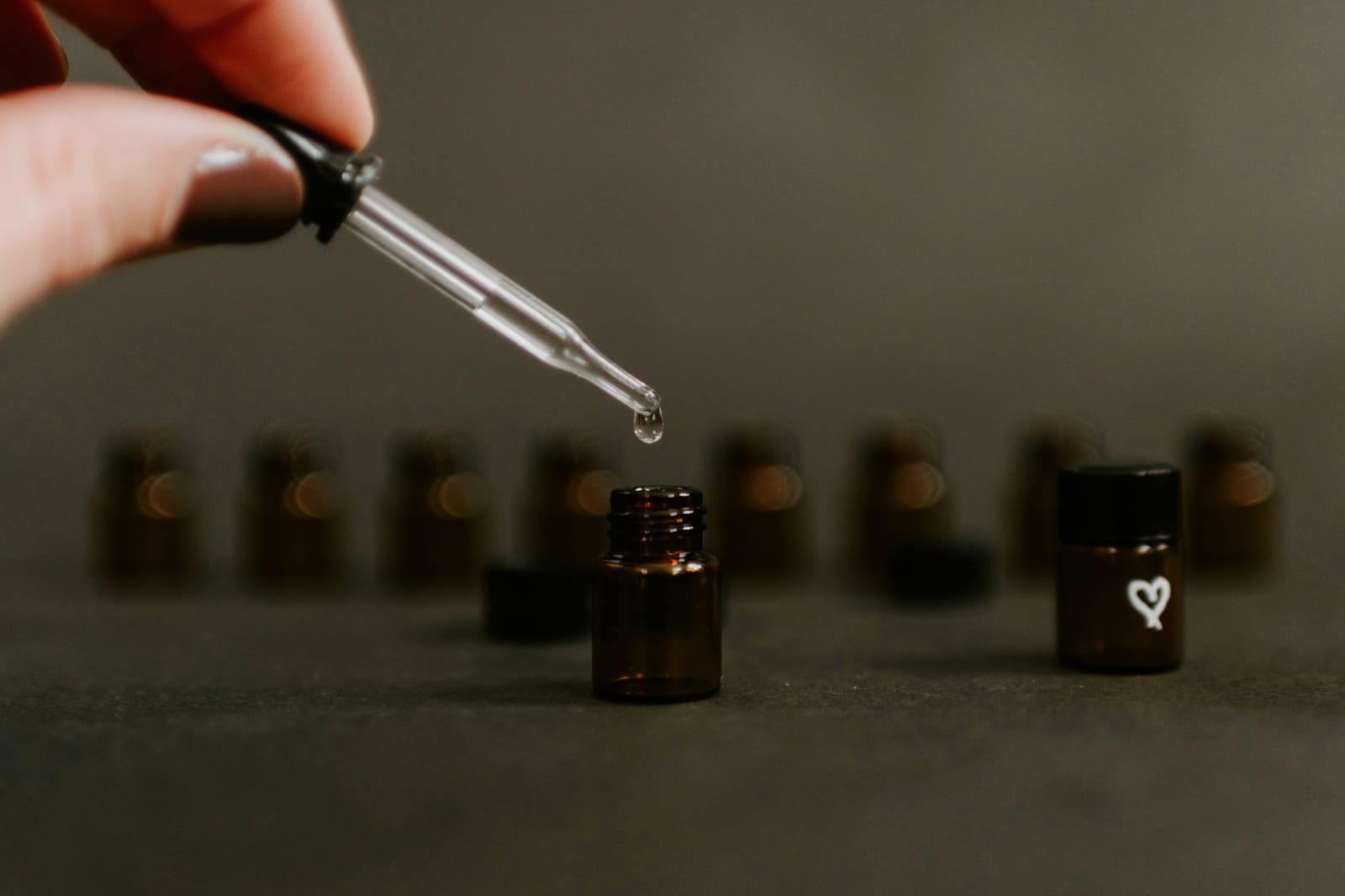
Sometimes the difference is dramatic. There are specific molecules that a portion of the population simply cannot smell, a phenomenon called specific anosmia. Certain musks are a classic case, tied to variation in a receptor called OR5A1: to one person a musky base note is the whole personality of a fragrance, and to another it is a blank space. Same candle, different signal.
Then memory layers on top of biology. Scent runs on a direct line to the parts of the brain that handle emotion and memory, which is why a smell can drop you into a specific moment from twenty years ago before you can name it. We dig into that wiring in our piece on scent and memory. The upshot is that a note one person reads as cozy can read as cloying to someone whose history attached it to something else entirely.
This is also why a "best-selling scent" tells you less than the label implies. A scent that a thousand strangers loved is, for you, a coin flip dressed up as a recommendation. Their noses are not your nose. It is the same reason a candle can seem to fade faster for one person than another, a perception quirk we cover in why your candle stops smelling. Popularity is a starting point, not an answer.
What this means for choosing a candle
Once you accept that scent is personal at the level of biology, a few things about buying candles start to make more sense.
First, there is no universally good scent. There is only the one your particular set of receptors happens to like, paired with the memories you bring to it. That sounds obvious, but most candle marketing quietly pretends otherwise, selling a single hero fragrance as if it were objectively correct. We would rather be honest: the right scent is the one that works for you, and the only way to know is to smell it for yourself.
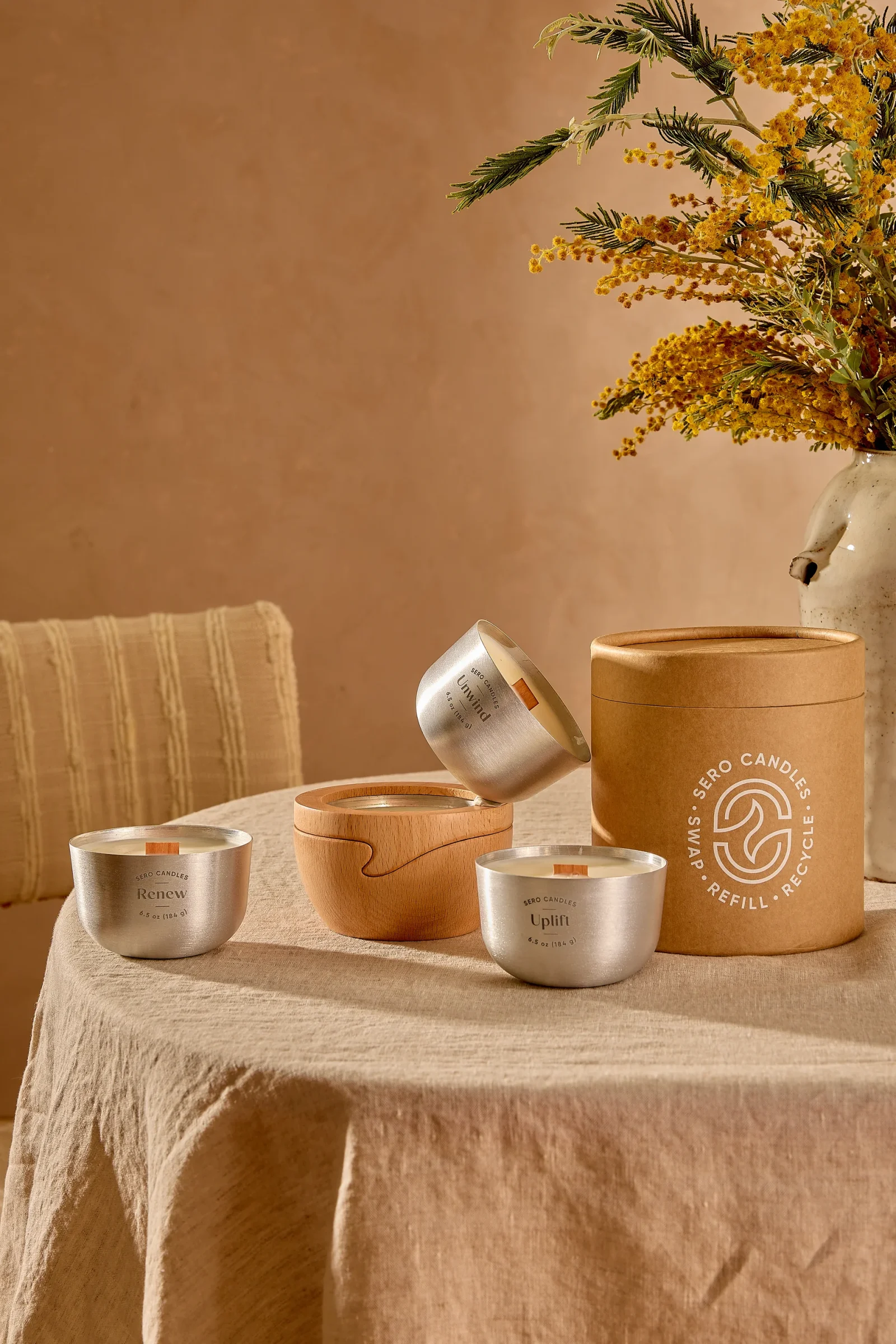
That belief shaped how we built Sero. We formulate three distinct profiles instead of one crowd-pleaser, because a crowd-pleaser is a myth. Renew is fresh and clean. Uplift is bright and citrus-forward. Unwind is grounded and smoky. They are designed for different noses and different moods, not as a ranking from best to worst. You can read exactly what goes into each one on our ingredients page.
It also shaped our fragrance load. We keep our scents deliberately subtle, present without taking over the room. Part of that is taste, and part of it is respect for the fact that your nose is sensitive in ways we can't predict. A candle that shouts gives you no room to decide whether you actually like it.
Subtle yet present is the whole idea.
And it is the reasoning behind the part of our system people are most surprised by: you can swap scents. Because the wood container stays and only the recyclable candle changes, you are never locked into a single fragrance. If a profile turns out not to be yours, the next one is a swap away, not a sunk cost. When biology guarantees that some scents won't land, the ability to change your mind stops being a nice-to-have. The candle we design is built around exactly that.
Can you change how cilantro, or a candle, smells to you?
Not really, and a little. You cannot reach in and edit your receptor genes, so if cilantro tastes like soap to you, it will probably always carry that note. But you can change the chemistry that reaches your nose. Crushing, chopping, or blending cilantro releases enzymes that break down the soapy aldehydes, which is why a smooth cilantro sauce can be tolerable to someone who gags on the whole leaf. Cooking it and pairing it with fat softens the effect too.
There is also a slower path. Plenty of people report that their cilantro aversion faded over years of low-pressure exposure. That is less about rewiring the receptor and more about the brain relaxing its alarm once a smell stops being novel and starts being familiar, often wrapped up in good meals and good company.
The same gentle rule applies to fragrance. You won't talk your nose out of its hardwired sensitivities, but context does real work. A scent encountered once, cold, on a crowded shelf is being judged under the worst possible conditions. The same scent lived with for a few evenings, attached to a wind-down routine, often reads completely differently. Smell is suggestible that way, which is part of what makes it worth exploring rather than ruling out. If the idea of scent as a mood tool interests you, we get into the evidence in our look at aromatherapy and candles.
The bottom line
Cilantro tasting like soap is one of those rare cases where everyday experience and hard genetics line up cleanly. A few variants in your smell-receptor genes decide which side of the argument you land on, and there is no talking anyone across the line.
The lasting takeaway is bigger than one herb. Your sense of smell is yours alone, shaped by a near-unique set of receptors and a lifetime of memory. No two people smell the same candle, which means the only review that ultimately counts is the one your own nose gives. The best candle is not the most popular one or the one with the longest list of notes. It is the one that smells right to you.
If you want to find yours, the honest way is to try. Explore our three profiles and let your own nose make the call.
Sources
- Eriksson et al., "A genetic variant near olfactory receptor genes influences cilantro preference," Flavour, 2012
- Cleveland Clinic, "Can a Gene Cause Cilantro To Taste Like Soap?"
- Trimmer et al., "Genetic variation across the human olfactory receptor repertoire alters odor perception," PNAS, 2019
- Britannica, "Why Does Cilantro Taste Like Soap to Some People?"
Frequently Asked Questions
Why does cilantro taste like soap to some people?
Because of genetics. People who taste soap carry variants in olfactory receptor genes, including OR6A2, that make them more sensitive to aldehydes, a class of compounds found in both cilantro leaves and many soaps. The brain reads that shared chemistry as "soap." It is a real perceptual difference, not pickiness, and it affects roughly 3 to 21 percent of people depending on ancestry.
What gene makes cilantro taste like soap?
The most cited is OR6A2, a smell-receptor gene that binds the aldehydes responsible for cilantro's aroma. A large genetic study pinpointed a variant called rs72921001, located within a cluster of olfactory receptor genes on chromosome 11, as significantly associated with perceiving cilantro as soapy. Smell, not the taste buds, drives the effect.
Can you get rid of the soapy cilantro taste?
You can't rewire your receptors, but preparation helps. Crushing, chopping, or blending cilantro releases enzymes that break down the soapy-smelling aldehydes, and cooking or pairing it with fat softens the effect. Many people also find their aversion fades with repeated, low-pressure exposure, more from context and familiarity than from any change to their genes.
Does everyone smell candles the same way?
No. Humans carry around 400 olfactory receptor genes, with significant variation from person to person. A single gene difference can change how intense or pleasant a scent seems, and some people can't detect certain molecules at all. So two people can light the same candle and genuinely smell two different things. Scent perception is closer to a fingerprint than a shared standard.
Why do my partner and I like different candle scents?
Partly genetics, partly history. Your olfactory receptors differ at the DNA level, so the same fragrance reaches each of you as a slightly different signal. On top of that, scent is wired tightly to memory and emotion, so a note that reads as cozy to one person can read as cloying to another. Different noses, different associations, different favorites.
Is scent preference genetic?
In part. Genetic variation in smell receptors affects how strongly you detect specific molecules and how pleasant they seem, and studies tie particular receptors, like OR5A1 for certain musks, to large sensitivity differences. But preference is also shaped by memory, culture, and personal association. Genes set the raw signal; experience decides what you do with it.


