



Quick answer
"Non-toxic" has no legal definition for candles in the US, so the word alone tells you nothing. A safer candle has seven verifiable traits: a disclosed wax type, a metal-free wick, a welded (not glued) wick clip, a fragrance free of phthalates and synthetic musks, a recyclable uncoated container, real burn data, and full ingredient transparency. Brands that score well on all seven publish it openly.
“Non-toxic” is a popular word in the candle aisle. It has no legal definition.
No federal agency certifies a candle as non-toxic. The FDA doesn’t regulate candles at all. The Consumer Product Safety Commission covers fire safety, not what a candle releases into your air. The industry’s own fragrance body, IFRA, publishes safety standards but it’s self-regulation, not law. Any brand can print “non-toxic” on a label without meeting any specific standard.
The word, on its own, tells you nothing. The verifiable details on the same label tell you almost everything.
We design candles. We had to figure out what “non-toxic” actually means in practice before we could decide what to put in ours. This is the seven-point checklist we wish more buyers had on hand. Apply it to any brand, including ours.
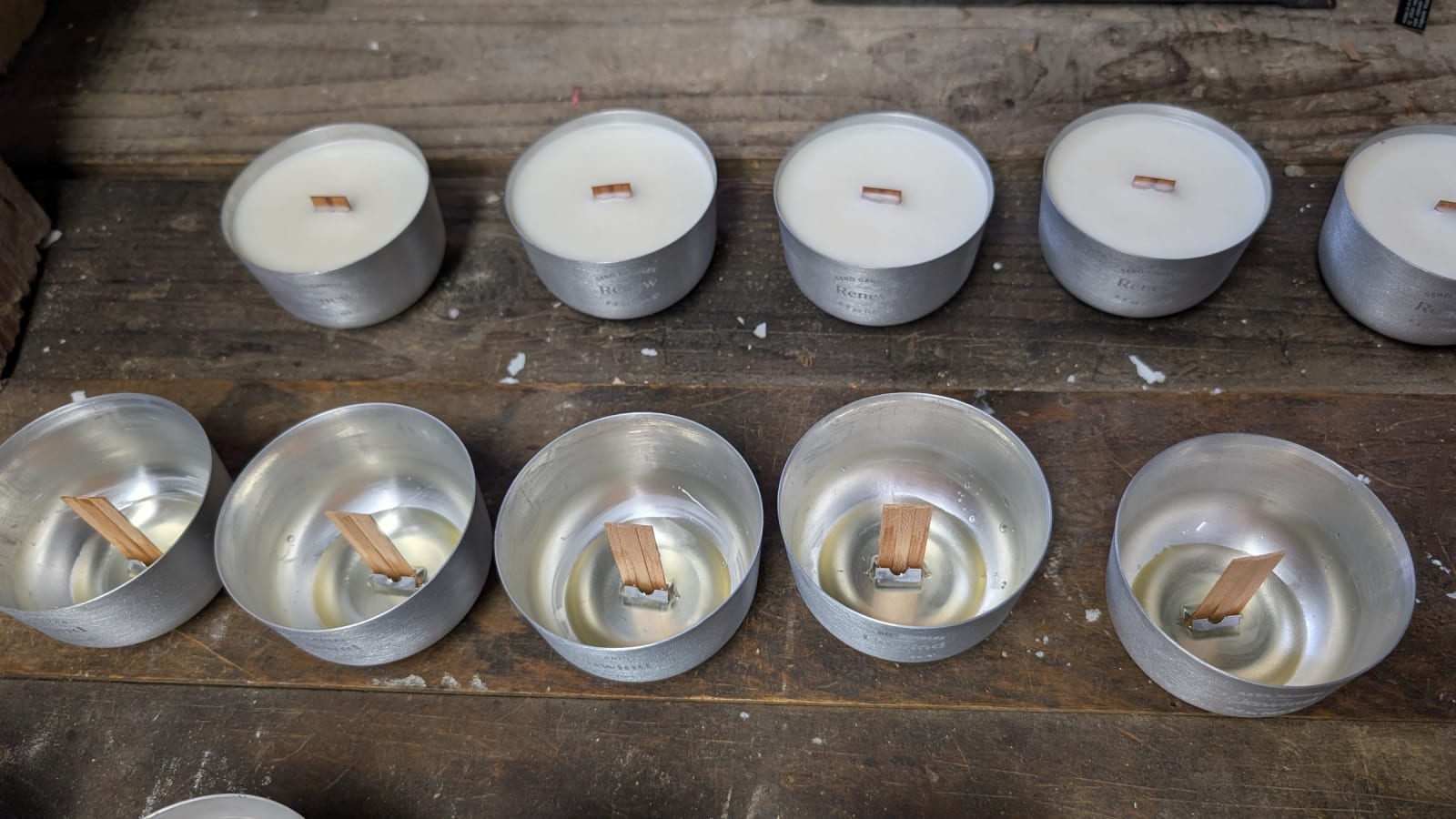
Why “Non-Toxic” Is Marketing, Not a Standard
The lack of regulation cuts two ways. There’s no rule saying a brand has to test their candle’s air quality, disclose their fragrance, or substantiate a “clean burning” claim. There’s also no rule saying they can’t.
What you get instead is a long list of overlapping unregulated terms: “clean,” “natural,” “pure,” “non-toxic,” “toxin-free,” “eco-friendly,” “essential oil only.” Most of them mean whatever the brand wants them to mean.
Two of them are especially worth watching. “Pure soy” has no FTC-defined soy percentage, so a candle that’s 60% soy and 40% paraffin can technically be labeled “pure soy” because it contains pure soy wax. And “fragrance” or “parfum” on a label is a legal loophole, since fragrance formulations are protected as trade secrets. Manufacturers can list dozens of compounds under that single word.
The fix isn’t suspicion. It’s specificity. The brands that aren’t hiding anything tend to publish the details. The ones hiding something tend to lean on the unregulated words instead.
Here are the seven things we look for, and what each one actually tells you.
Break for research
Help us figure out our next scents
These scents are top of nose right now. Give us your opinion.
- Cashmere plumSmells like: ripe plum over soft woods
- Himalayan bambooSmells like: fresh-cut green stems
- PetrichorSmells like: the first rain on warm ground
- Coriander and limeSmells like: lime zest with a peaty, smoky edge
Want to hear which ones make it?
We'll email you the results and which scents go into testing.
Thanks!
You're on the list. Check your inbox.
There was an error. Please refresh the page and try again.
Unsubscribe anytime. Your vote counts whether or not you sign up.
#1: The Wax
Wax type is the first thing most articles cover, and the place most buyers stop. It matters, but it’s only one of seven inputs.
The four common candle waxes:
Paraffin is a petroleum byproduct, refined from crude oil. It’s cheap and holds fragrance well, which is why it dominates mass-market candles. When it burns incompletely it can release volatile organic compounds including benzene and toluene. Not every paraffin candle is harmful, but the combustion chemistry is real, and most cheap paraffin candles aren’t engineered for complete combustion.
Soy is plant-based, made from hydrogenated soybean oil. It burns at a lower temperature than paraffin, throws less soot, and behaves as what chemists call an oxygenated fuel, meaning it brings some of its own oxygen to the reaction and tends to burn more completely. It also tends to “frost” on the surface, which looks imperfect but is harmless.
Coconut is plant-based, sourced from hydrogenated coconut oil. Similar profile to soy with slightly better scent throw, but the sustainable sourcing chain is shorter and more constrained.
Beeswax burns cleanest by default, has a faint honey scent of its own, and lasts longest per ounce. It’s also the most expensive and the slowest to take added fragrance, which is why most beeswax candles are sold unscented or lightly scented.
The “100% soy” or “100% beeswax” claim sounds like the answer. In practice, formulators often blend waxes because the combination performs better, burns more evenly, and holds fragrance more reliably than a single wax alone. A well-formulated blend can outperform a purist single-wax candle on every meaningful measure. The catch is that “blend” needs to be disclosed.
| What it is | What it does in the burn | |
|---|---|---|
| Paraffin | A petroleum byproduct refined from crude oil | Cheap and holds fragrance well. Incomplete burns can release VOCs including benzene and toluene |
| Soy | Plant-based, from hydrogenated soybean oil | Burns cooler with less soot. An oxygenated fuel, so it tends to combust more completely. Frosts on the surface |
| Coconut | Plant-based, from hydrogenated coconut oil | Close to soy with slightly better scent throw. Sourcing chain is shorter and more constrained |
| Beeswax | Naturally produced, with a faint honey scent of its own | Cleanest by default and longest lasting per ounce. Slowest to take added fragrance, and the priciest |
Here’s the part the wax-type debate misses: burn quality matters more than wax purity for what you’re actually breathing.
"A poorly burning candle gives off particulates in the air regardless of the wax. The wax is only one part of it." Ben LoBue, Sero founder
A tunneling, soot-throwing 100% soy candle puts more particulates in your air than a properly combusting blended candle. The wax sets a ceiling, but combustion quality determines what you actually inhale.
What to check: a specific wax type, disclosed by name and percentage if it’s a blend. “Natural blend” or “premium wax” without specifics is the same as no answer. For a closer look at this comparison, see soy versus paraffin: what actually matters.
#2: The Wick
Wicks look simple. They aren’t.
The wick is what regulates the burn. Its diameter, material, and structure decide how much wax melts, how fast it melts, and how completely it combusts. A wick that’s too small produces a weak flame and tunnels. A wick that’s too large pulls more wax than the available oxygen can fully burn, producing soot and dumping VOCs into the air. A correctly sized wick burns at a steady rate with a clear flame and a clean wax pool.
Three wick materials are common:
Cotton wicks are the default. They’re woven, sometimes braided around a paper or zinc core, and they burn predictably. Look for “lead-free” explicitly. Lead wicks were banned in the US in 2003, but imported candles occasionally still slip through. Paper-core or unbleached cotton are the cleanest options.
Wood wicks are flat or hollow strips of natural wood, usually cherry, maple, or birch. They produce a soft crackle as moisture and wood volatiles combust in micro-explosions. They burn at a slightly lower temperature than cotton, with a wider flame, which can throw more fragrance into the room. They have a learning curve. They need to be trimmed differently (to about 1/4 inch, with the carbon from the previous burn knocked off), and they often need a longer first lighting hold. We have a full wood wick troubleshooting guide if you’ve had issues with one before.
Hemp wicks are less common in poured candles but worth knowing about. They burn slow and clean, often coated in beeswax for ignition.
Any wick with a metal core should specifically say lead-free. The structure also matters: braided cotton burns more evenly than spun cotton, and properly cured wood wicks burn more steadily than uncured ones. If a brand can tell you the wick material and source, they probably know what their candle is actually doing in the air.
#3: The Wick Clip
This is the one most articles never mention.
Underneath the wick, at the bottom of the wax pool, sits a small metal clip that anchors the wick to the container. Most candles use a stainless steel clip with an adhesive (often a double-sided sticker or a heat-resistant glue) holding the clip to the container’s base. The adhesive sits inside the wax pool. As the flame burns down and the wax melts away, the heat eventually reaches the adhesive zone. What happens there depends on the adhesive, and most brands won’t tell you what they’re using.
This is a real combustion variable, and it’s almost entirely undiscussed in non-toxic candle guides.
We had to deal with this from a different angle. Our candles are poured in aluminum cups. The whole point is that the entire candle goes into curbside recycling. Off-the-shelf wick clips are stainless steel, which contaminates an aluminum recycling stream. That meant we had to design our own clips out of aluminum, custom-welded directly to the cup base instead of glued. Same material as the cup, no adhesive in the wax path.
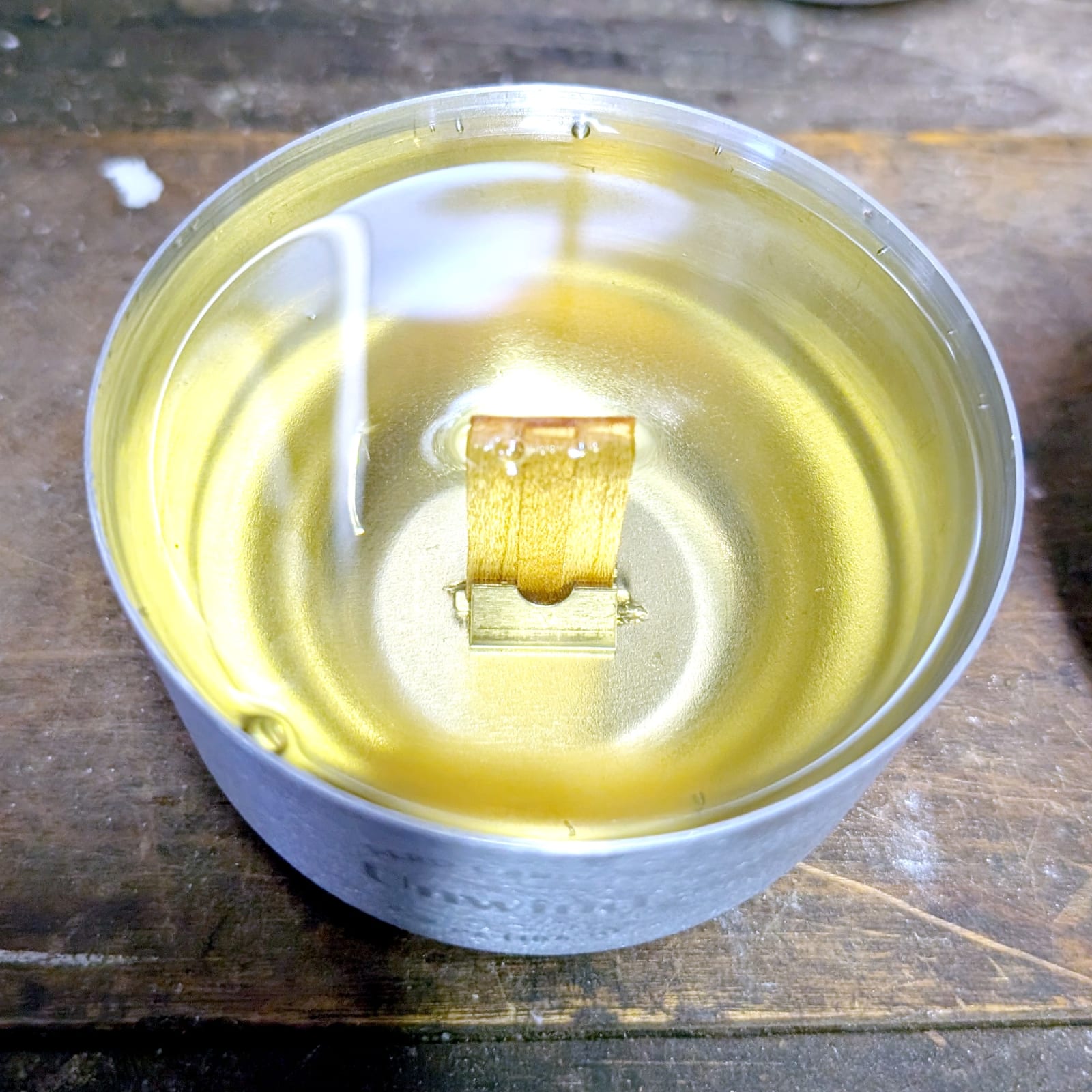
That’s a specific manufacturing choice with a verifiable result. We’re not the only brand that could make it, but as far as we know, we’re the only one currently using welded aluminum wick clips. What to look for in any brand: a clear answer about how the wick is anchored, and what’s between the wick base and the wax.
#4: The Fragrance
Fragrance is where the most chemistry is hidden, the most claims are made, and the most damage to indoor air quality tends to happen if a candle is badly formulated.
"Fragrance oils are probably the biggest black hole. What is actually in a candle's fragrance? That's something we put a lot of energy into, really sourcing partners we trust." Ben LoBue, Sero founder
The specific compounds worth checking for:
Phthalates are a class of plasticizers used as fragrance carriers and fixatives to make scents last longer. The most common in fragrance is diethyl phthalate (DEP). They’re endocrine disruptors, meaning they can interfere with hormone function. The European Union restricts certain phthalates in consumer products. The US does not. A “phthalate-free” claim, when verifiable, is one of the most specific and meaningful labels a candle can carry.
Parabens are preservatives more common in cosmetics than candles, but they show up in some fragrance bases. Worth checking.
Synthetic musks are large polycyclic compounds. Some, like galaxolide and tonalide, accumulate in body tissue and water systems. Not every synthetic musk is concerning, but undisclosed musks are worth flagging.
Undisclosed “fragrance” or “parfum” is the catch-all. Under US law, fragrance formulations are trade secrets. A candle can list “fragrance” and stop there, leaving anywhere from one to dozens of compounds undisclosed.
There’s a common assumption that essential oils sidestep all of this. Sometimes they do. Sometimes they don’t.
The right question isn’t “natural or synthetic.” It’s “what’s actually disclosed, and how does it perform in combustion.” For a longer look at how essential oils and fragrance oils behave differently in a candle, see essential oils versus fragrance oils in candles. For pet households, where some essential oils are toxic to cats and dogs, the pet safe candles guide goes deeper.
#5: The Container
Containers don’t get burned, but they shape almost everything about a candle’s lifecycle. They affect heat distribution during the burn, they often interact with the wax along their walls, and they decide what happens when the candle is empty.
Where a candle container ends up
Four decision points between the pour and the curb
- AT THE POURThe choice is madeGlass, coated tin, uncoated aluminum, or glazed ceramic.
- WHILE IT BURNSHeat and waxThe container shapes heat and meets wax at the wall.
- WHEN EMPTYLabels and adhesivePaper labels and glue have to come off before it recycles.
- AT THE CURBAccepted or notBorosilicate is usually rejected. Aluminum goes with the cans.
Glass is the default. Most candle jars are borosilicate or tempered soda-lime glass, chosen because they tolerate the heat of a burning candle without cracking. Borosilicate glass is heat-resistant by design, which also means it doesn’t recycle with regular curbside glass. Most curbside programs reject borosilicate because its melting point disrupts the standard recycling stream. Many “recyclable” glass candle jars are recyclable in theory and landfilled in practice.
Coated aluminum is sometimes used in mass-market tins. The coating is meant to keep wax from interacting with the metal, but the coating itself can leach into the wax over time, especially at warm pour temperatures.
Uncoated aluminum is the cleaner option, and the more recyclable one. Aluminum is infinitely recyclable, recycles at a roughly 43% rate for beverage cans in the US (2023, Aluminum Association and Can Manufacturers Institute), and uses about 95% less energy to recycle than to produce from virgin bauxite.
Ceramic can be excellent or problematic depending on the glaze. Some glazes contain lead. Lead-free is the default to look for, and verifiable through the manufacturer.
The container affects the candle while it burns, and it decides where the candle goes when it’s done. For a deeper comparison of the recyclability of each material, see why aluminum beats glass for the planet.
#6: Burn Data, Not Marketing
You can tell a lot about a candle from the first light. We can usually tell within five minutes whether something is going to be a problem.
Three things to look at:
Flame size and behavior. A well-tuned candle has a flame that holds steady at the wick’s intended height, doesn’t flicker erratically (in still air), and doesn’t reach more than an inch above the wick. A flame that’s too tall is pulling more wax than the oxygen can burn. A flame that’s too small isn’t fully melting the surface and will tunnel.
The first-burn smell. A clean candle smells like its scent profile. A poorly formulated candle smells synthetic in the first minutes, sometimes acrid, sometimes plasticky. Trust this instinct. If the first burn feels wrong in your nose, it almost certainly is.
The wax pool. After an hour, a properly wicked candle has a clear, even wax pool reaching the edges of the container. Cloudy, broken, or uneven pools indicate poor formulation or improper wicking. Visible soot, on the wick or rising from the flame, indicates incomplete combustion.
- 1Light it and start the clockWe can usually tell inside five minutes whether a candle is going to be a problem.
- 2Watch the flameIt should hold steady at the wick's intended height, no erratic flicker in still air, no more than an inch tall.
- 3Smell the first few minutesA clean candle smells like its scent profile. Acrid or plasticky at the start is a formulation problem.
- 4Check the pool at one hourA properly wicked candle has a clear, even pool reaching the container edge. Broken or uneven means tunneling ahead.
- 5Look for sootSoot on the wick or rising off the flame is incomplete combustion, and it is going into your air.
The brands worth trusting tend to publish burn data: hours per ounce, recommended burn time per session, fragrance load percentage. The brands that don’t, usually don’t because they haven’t measured it. For more on the diagnostic frame, our headache test article walks through the practical version of this checklist for anyone whose candles have caused symptoms before.
#7: Transparency
This is the simplest check, and the one that captures all the others.
Can the brand tell you, on the label or the product page, exactly what’s in the candle? Specific wax type and percentage. Wick material and source. Fragrance compounds and disclosure of phthalate-free status. Container material and recyclability. Manufacturing details that matter for combustion, like the wick clip and the fragrance load.
Brands that publish this kind of detail tend to have made deliberate choices on each input. Brands that lean on unregulated terms (“natural,” “clean,” “pure”) without specifics usually do so because the specifics wouldn’t help their case.
This is the spirit behind the Sero Standard, our own attempt to publish every meaningful ingredient choice and the reasoning behind it. The point isn’t that ours is the only right answer. It’s that the choices should be visible and verifiable. You can see our full ingredient list at any time.
Apply the Checklist
The seven dimensions, in summary, and what to look for in each:
- Wax. Specific type, disclosed by percentage if blended. Burn quality matters more than purity claims.
- Wick. Cotton (lead-free, paper-core), wood, or hemp. Sized correctly for the container.
- Wick clip. Welded, or a clear disclosure of the adhesive used.
- Fragrance. Phthalate-free, with specific compound disclosure when possible. “Natural” alone isn’t an answer.
- Container. Recyclable in your area (aluminum almost always; borosilicate glass almost never). Uncoated.
- Burn data. Real numbers, not adjectives. Hours per ounce. Fragrance load. Visible burn behavior.
- Transparency. Published, specific, and verifiable on every other item.
No candle scores seven of seven by accident. The brands that do, make it the point. Apply the checklist to any brand you’re considering. If you’d like to apply it to ours, our 6.5 oz candle is here.
The checklist works just as well when you are buying for someone else, though a few things change when you cannot ask the person what they like. We covered those in our candle gift guide.
Frequently Asked Questions
What ingredients should you avoid in candles?
Avoid phthalates (especially diethyl and dibutyl phthalate), synthetic musks, parabens, and undisclosed "fragrance" or "parfum." Skip candles with bright synthetic dyes and any wick with a metal core (lead wicks were banned in 2003, but imported candles sometimes still slip through). Paraffin wax can release benzene and toluene during incomplete combustion. Choose soy, coconut, or beeswax, with a phthalate-free fragrance and a verifiable wick clip.
Are soy candles really non-toxic?
Soy candles avoid the petroleum-derived combustion byproducts of paraffin, which is a meaningful upgrade. But "soy" alone doesn't certify the candle as non-toxic. The fragrance, the wick, the wick clip, and the container all matter independently. A soy candle with a phthalate fragrance and a glued metal wick clip is not non-toxic. Check all seven dimensions, not just the wax.
Are essential oil candles safer than fragrance oil candles?
Not automatically. Essential oils degrade at candle flame temperatures (around 1,000°C at the wick tip), and incomplete combustion can release byproducts including acrolein. A phthalate-free, IFRA-compliant fragrance oil at a controlled load can actually burn cleaner than an essential oil candle. The right question is "what's the full fragrance disclosure?" rather than "is it natural?"
How can you tell if a candle is non-toxic?
Check the label, the website, and the burn behavior. A non-toxic candle discloses its wax (specific type, not "natural blend"), wick material, fragrance source, and any additives. The flame should be steady, the wax pool clear, and the candle should not produce visible soot. If the brand cannot tell you what's in the fragrance, treat that as a no.
Is there an official non-toxic candle certification?
No. There is no FDA, EPA, or industry certification for "non-toxic" candles in the US. The FDA does not regulate candles. The CPSC oversees fire safety, not air quality. IFRA (International Fragrance Association) sets fragrance safety standards but is industry-funded self-regulation, not law. Brands using "non-toxic" are making their own claim. Verify it against the seven-dimension checklist.
What's the safest type of candle to burn at home?
A candle made from a disclosed natural wax (soy, coconut, or beeswax, or an honest blend), with a cotton or wood wick, a welded wick clip, a phthalate-free fragrance, a recyclable uncoated container, real burn data, and full ingredient transparency. No single trait makes a candle safe. The combination does. Pets, asthma, or pregnancy increase the case for verifying all seven.


