



Quick answer
Most Christmas candle scents come from five families: the tree (fir, pine, juniper), resins like frankincense, spices like cinnamon and clove, smoke and woods, and sweet notes like vanilla, orange and peppermint. Several share molecules. Pinene runs through fir, juniper and frankincense, and the smoky guaiacol in a wood fire is a chemical cousin of clove's eugenol and vanilla's vanillin, which is why these notes blend so easily.
If you've been shopping for a Christmas candle, you've probably noticed the notes repeat. Fir or pine, cinnamon and clove, vanilla, orange, now and then frankincense or something smoky. The names on the labels change from brand to brand, but the list underneath them barely does.
There's no Christmas candle in our lineup, but Unwind and Renew are built from the same families, and we've written up several of the molecules involved in our Scent Library. So here's what's behind the most common Christmas candle scents, how to pick one for the way you spend December, and where ours fit (and where they don't).
The Five Families Behind Christmas Candle Scents
Almost every Christmas candle draws on one or more of five families. Some smell like the tree itself, some like the spice cabinet, some like the fireplace. Here they are, with the molecule that does most of the work in each.
| Family | Smells like | Notes you'll see | The molecule behind it |
|---|---|---|---|
| The tree | Fresh-cut needles, green and a little sharp | Balsam fir, pine, spruce, juniper, cypress | Pinene and bornyl acetate |
| Resin | Warm, piney incense | Frankincense, myrrh | Alpha-pinene, the same one in the tree |
| Spice | Warm, sweet heat | Cinnamon, clove, nutmeg | Cinnamaldehyde in cinnamon, eugenol in clove |
| Smoke and wood | A wood fire, charred wood, leather | Smoked woods, oud, cedar | Guaiacol and other phenols from burning wood |
| Sweet | Baking, candy, the fruit bowl | Vanilla, orange, peppermint | Vanillin, limonene, menthol |
Why these read as Christmas is mostly memory. Smell has an unusually direct line to the parts of the brain that store memories, so a smell you met every December as a kid can bring the whole room back (more in our piece on scent and memory). A fir candle smells like Christmas because Christmas smelled like fir. Some of it is tradition, too: burning a bayberry candle on Christmas Eve is an American custom that goes back to colonial candlemaking.
Break for research
Help us figure out our next scents
These scents are top of nose right now. Give us your opinion by January 9.
- Cashmere plumSmells like: ripe plum over soft woods
- Himalayan bambooSmells like: fresh-cut green stems
- PetrichorSmells like: the first rain on warm ground
- Coriander and limeSmells like: lime zest with a peaty, smoky edge
Want to hear which ones make it?
We'll email you the results and which scents go into testing.
Thanks!
You're on the list. Check your inbox.
There was an error. Please refresh the page and try again.
Unsubscribe anytime. Your vote counts whether or not you sign up.
The Tree: Fir, Pine and Juniper
The smell of a Christmas tree comes mostly from two kinds of molecule. Pinenes give the needles their green, slightly sharp edge, and bornyl acetate adds the fresh, clean note most of us would just call pine (Compound Interest's breakdown of pine aroma is a good read). In balsam fir, the tree behind most fir candles, one tested lot of needle oil came back about a third pinenes, with carene, limonene and bornyl acetate making up most of the rest.
Pinene isn't only in Christmas trees. It's the lead molecule in our juniper note and part of what makes cypress smell dry and evergreen, which is why both read as forest without reading as a decorated tree. If you want the tree itself, look for balsam, fir or pine near the top of the notes. If you want the outdoors in winter, juniper and cypress get you there.
Resin and Smoke: Frankincense and the Fireplace
Frankincense and myrrh are in the Christmas story itself, two of the three gifts, and chemically frankincense sits right next to the tree. A 2019 study of frankincense oils found them dominated by alpha-pinene, at 21 to 56 percent, the same molecule in fir needles. That's why a frankincense candle can smell like a church and a forest at the same time.
Smoke is the family people describe as "fireplace." When wood burns, the lignin that holds it together breaks down into phenols, and those phenols carry most of the smoky smell. A 2023 study of smoke aroma lists guaiacol among them and describes its smell as smoky, woody, clove-like and vanilla-like. Our smoked oud note is built for that charred, resinous depth.
A wood wick adds the sound to go with it. The crackle comes from moisture and volatiles trapped in the wood vaporizing quickly, tiny pops that read as a fireplace (more in our wood wick guide).
Spice and Sweet: Cinnamon, Clove, Vanilla and Peppermint
Cinnamon's warmth comes from cinnamaldehyde, the main compound in nine cinnamon bark oils tested in a 2013 study, at 66 to 82 percent. True cinnamon carries some eugenol too, and eugenol is a major component of clove oil. Orange peel brings limonene, which also turns up in small amounts in pine. And peppermint, the candy cane note, runs on menthol, which triggers the same nerve receptor that senses cold (our peppermint note explains why).
That overlap is good news when you're choosing. A candle that blends two neighboring families, like fir and frankincense or clove and vanilla, usually smells more finished than one that stacks five unrelated notes.
How to Choose a Christmas Scent
Start with the part of the season you want in the room, then read the notes for it.
| If you want | Look for |
|---|---|
| The tree, in a room without one | Balsam fir, pine or spruce near the top of the notes |
| The fireplace | Smoke, oud, cedar or leather, ideally with a wood wick |
| Holiday baking | Cinnamon, clove, vanilla, orange |
| Something fresh between busy days | Peppermint, eucalyptus, juniper |
| A scent that lasts into January | Woods, resins and evergreens rather than candy and cookie notes |
Strength matters more in winter. The windows stay shut, so a strong candle builds up fast, and your nose tunes out a heavy scent sooner than a light one. We keep our fragrance load on the quieter side for that reason: subtle yet present.
If there's a cat or a dog at home, check how a candle is scented, since peppermint and citrus are Christmas regulars. Ours are easy to check. Scented with phthalate-free fragrance oils, not essential oils. Veterinary poison centers list tea tree, eucalyptus, peppermint, and citrus among the essential oils toxic to cats and dogs.
And wherever it goes, give it a foot of clear space from the tree, the garland and anything else that can catch. Our guide to burning a candle properly has the rest.
Where Ours Fit
Unwind is the closest we have to a Christmas candle, and Renew is the one for the bright, cold mornings in between. Both are The Sero Candle, each in its own scent.
Cozy & Warm
Unwind
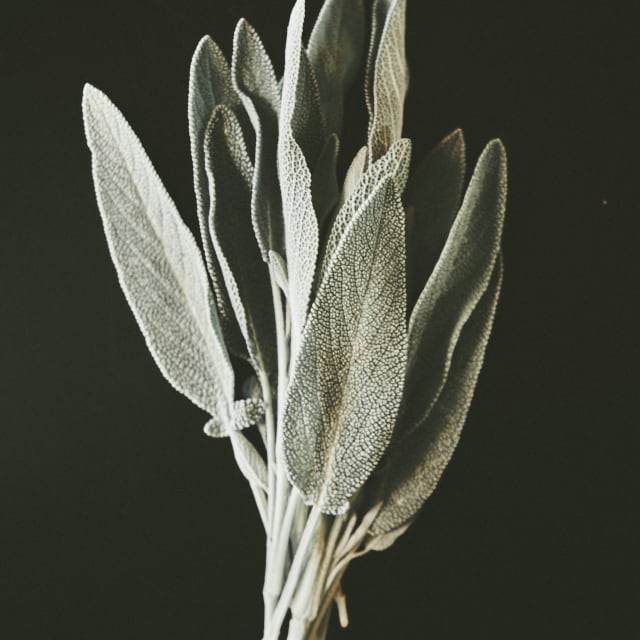
Sage, cypress, smoked oud
Smells like: The reading chair, after the fire burns low
Cypress brings the dry evergreen and smoked oud the fireplace, with sage to keep it from getting heavy. The one we'd light on a December evening.

Fresh & Clean
Renew
Eucalyptus, juniper, santal, peppermint
Smells like: Stepping out of the shower with the window cracked open
Closer to a winter morning: peppermint and eucalyptus up top, juniper for the green, santal underneath. The one for the morning after a party.
If the smell you're after is the cookie tin or the tree lot, a cinnamon or balsam candle will get you closer than ours will. And if you already have a wood container, the swap is the easy part: drop in Unwind for December and switch back whenever you're ready.
The Short Version
Christmas candle scents come from five families: the tree, resin, spice, smoke and sweet. Several of them share molecules, which is why fir and frankincense, or smoke and clove, blend so easily. Pick the family that matches how you spend the season, keep the strength moderate in a closed-up winter house, and check how it's scented if there are pets. For a cozy December evening, start with Unwind.
Sources
- Andy Brunning, "The Chemistry of Christmas Tree Aroma," Compound Interest, 2014
- Amrita, Certificate of Analysis, Fir Balsam Organic, lot 3511-GGZHZ (gas chromatography), 2019
- DeCarlo et al., "Chemical Composition of the Oleogum Resin Essential Oils of Boswellia dalzielii from Burkina Faso," Plants, 2019
- Rigling et al., "Characterization of the Aroma Profile of Food Smoke at Controllable Pyrolysis Temperatures," Separations, 2023
- Li, Kong and Wu, "Analysis and evaluation of essential oil components of cinnamon barks using GC-MS and FTIR spectroscopy," Industrial Crops and Products, 2013
- PubChem, Eugenol (CID 3314), with the ChEBI description
- PubChem, Guaiacol (CID 460)
- PubChem, Vanillin (CID 1183)
Common Questions About Christmas Candle Scents
What are the most popular Christmas candle scents?
Fir and pine, cinnamon and clove, vanilla, orange, peppermint, frankincense and smoky woods. They fall into five families: the tree, resin, spice, smoke and sweet. Most Christmas candles blend two or three of them, like fir with cedar or cinnamon with vanilla and orange, and several of these notes share molecules, so they sit together easily.
What makes a candle smell like a Christmas tree?
Mostly pinene and bornyl acetate, the molecules behind the green, clean smell of fir and pine needles. Balsam fir needle oil is about a third pinenes, with carene, limonene and bornyl acetate close behind. Look for balsam, fir, pine or spruce near the top of the notes. Juniper and cypress share the pinene, but they read more like a forest than a decorated tree.
What does Christmas smell like?
For most people it's some mix of evergreen, spice, wood smoke and something baking: fir needles, cinnamon and clove, a fire, vanilla and orange. Smell is closely tied to memory, so the exact mix depends on what your Decembers smelled like growing up. That's why one person's Christmas candle is another person's ordinary pine.
Why does frankincense smell like Christmas?
Partly history, since frankincense is one of the three gifts in the Christmas story, and partly chemistry. Frankincense oils are dominated by alpha-pinene, the same molecule in fir and pine needles, so a frankincense candle reads as warm, resinous and a little piney at once. It pairs naturally with fir, cedar and smoky woods.
What should I check before buying a Christmas candle for a home with pets?
Check how it's scented. Peppermint and citrus are Christmas regulars, and plenty of candles get them from essential oils. Here's the answer for ours. Scented with phthalate-free fragrance oils, not essential oils. Veterinary poison centers list tea tree, eucalyptus, peppermint, and citrus among the essential oils toxic to cats and dogs.
What candle scents work for the whole winter?
Woods, resins and evergreens carry from late November into February better than candy and cookie notes, which can feel out of season once the decorations come down. Cypress, cedar, juniper, smoked woods and frankincense all read as winter without reading as Christmas. Our Unwind, with sage, cypress and smoked oud, comes from that family.


